
Hit the SPOT
Going way back for this one.

Someone has to build the trails.
My parents started taking me on trails before I could even walk on them myself. I always had a vague knowledge that trails didn’t just appear out of thin air — someone had to put them there — but it wasn’t until 2012 that I really started to think about who did that and how.
I was eighteen, getting ready to start my first year at Stanford University in California. It was all very complicated, with lots of paperwork to fill out and fees to pay and logistics to wrangle. Sometimes I wanted to just throw it all in the air and give up. I don’t know how my parents put up with me.
One of the logistics to wrangle was the prospect of snagging a place on one of the coveted Stanford Pre-Orientation Trips (SPOT). As the name suggests, SPOT takes place the week before New Student Orientation begins, giving a few lucky incoming freshmen a chance to meet some classmates and have a little adventure before settling into the main adventure of our first year at university.
Typically, SPOT is outdoor-focused. My year featured a few backpacking trips, a couple groups that would stay at and work on farms, and one called “Wilderness Stewardship,” each taking about 10-12 students. It was that lone stewardship trip that I had my eye on, and I knew that places went fast once registration opened.
After doing an extensive time zone conversion and calendar check, my parents and I determined that we were scheduled to be on a train when registration opened. A train to Vienna, specifically — the final leg of a three-week jaunt, mostly by RV, around Germany, Croatia, Slovenia, and Austria. But that’s another story.
While the trains that I take around England now have good, reliable wifi for the most part, that train in 2012...did not so much. We enlisted every family laptop with the registration page open and maniacally refreshed as the time drew near, intending to proceed on whoever’s loaded fastest once the time came. It was a bit of a whirlwind, but when the dust settled I had what I was after: a place in the one and only Wilderness Stewardship SPOT group. We traipsed off to my namesake city in high spirits, and celebrated with the drinks that I could legally order there but not yet in the US.
On September 11, 2012, I flew from Virginia to California — solo, as my parents would be joining me later to help when it was time to actually move into my dorm. I spent the night in San Francisco with some dear family friends, who delivered me and my backpacking gear to Stanford the following day. After a flurry of registration and welcome activities and meeting our fellow SPOTlets and group leaders, the whole lot of us settled down to camp on Roble Field.
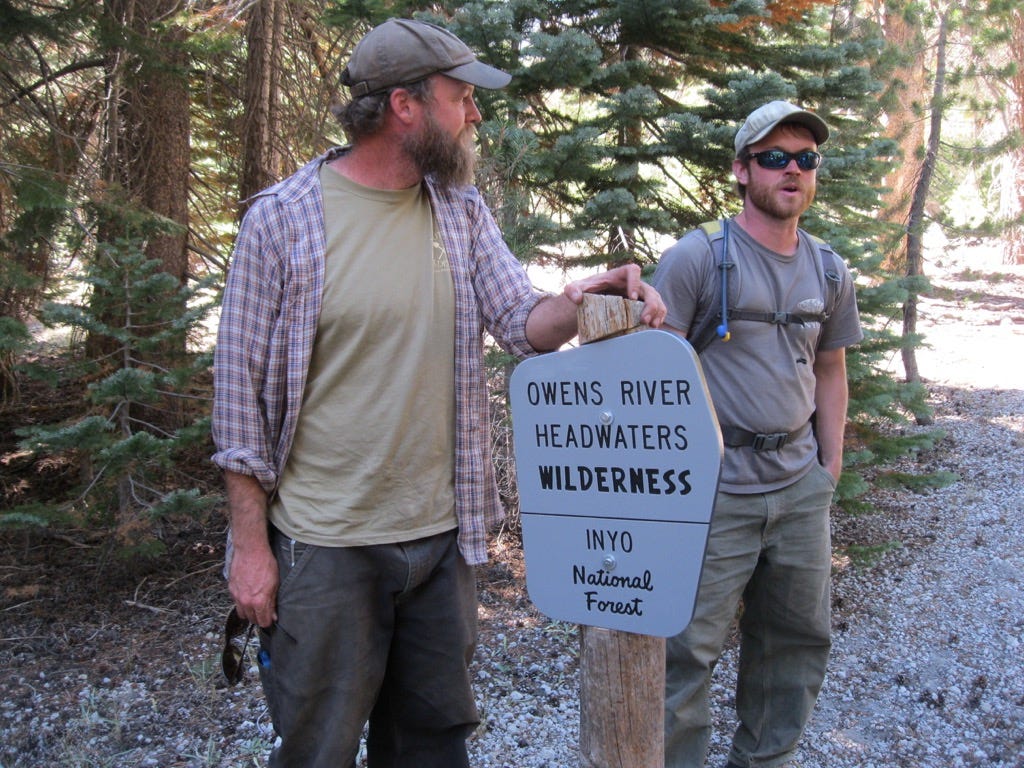
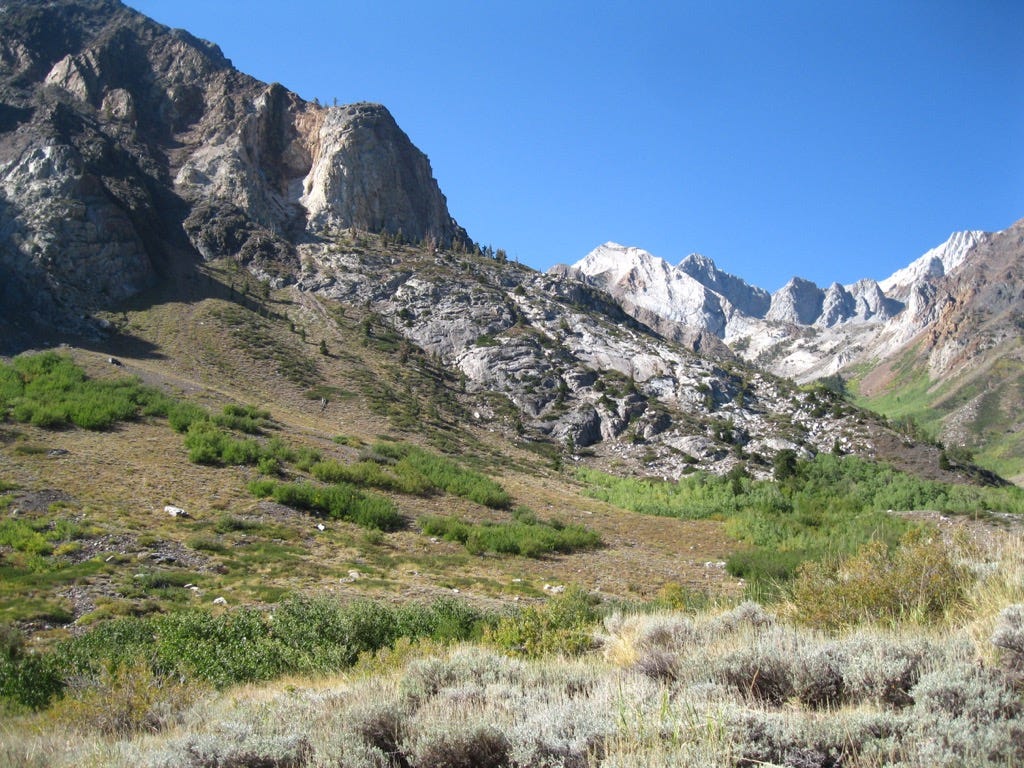
Bright and early the next day, my group piled our gear and ourselves into multiple vans and set off for the Eastern Sierra. We arrived several hours later in the Owens River Headwaters Wilderness (a Wilderness Area situated within Inyo National Forest, designated as such in 2009 when President Obama signed the Omnibus Public Land Management Act), unloaded all our gear, and with our student SPOT leaders and our stewardship leaders began the trek to our base camp.
Our days were long and filled with hard work. We rose before the sun reached our camp, shivering in the semidarkness as we watched it creep down the slopes opposite us and taking bets on how long it would take to reach us. After a quick-but-hearty breakfast, we gathered our tools and set off for the day’s tasks.
Much of what we did was maintenance and repair work to existing trails. If a tree had fallen across the trail, for example, and couldn’t easily be stepped over or crawled under, it had to either be moved or cut through to clear the path. If you’ve ever been hiking and encountered part of a tree trunk on each side of the trail with a chunk cut out of the middle — yep, we did stuff like that.
In addition to trees, we had to clear general undergrowth away from the trails. We got to use all kinds of fun tools like saws and huge shears. After cutting through whatever was blocking the path, we also had to lug it out of the way, depositing chunks of tree and armfuls of underbrush further back in the forest.
Another thing we did was using rocks of various sizes to line the edges of trails. Sometimes these rocks were small enough to be carried without too much trouble, others were large enough that hauling them into place was a challenge. Sturdy gloves were essential.
One afternoon, our task was repairing a small bridge over a creek. Another time, it was repainting trail blazes on trees.
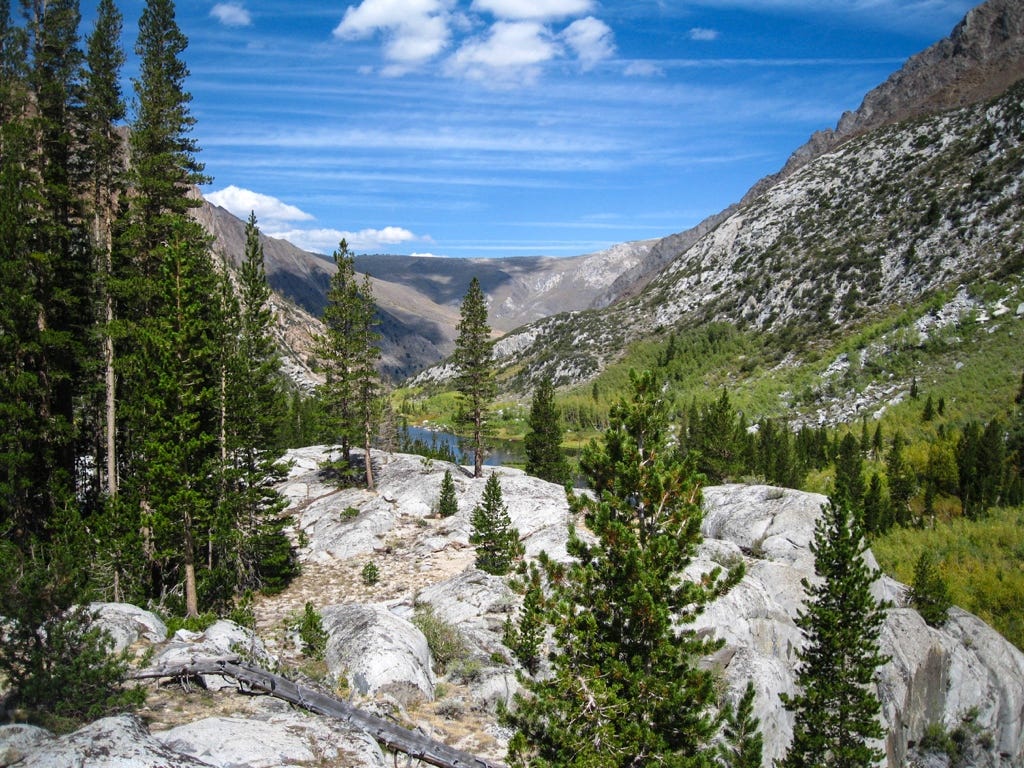
Important to note is that all of this was taking place under the tutelage and scrutiny of trained trail workers. They knew where and how to source rocks for the trails and wood for the bridge, what kind of paint to use for the blazes, and where to put the tree chunks and brush that we cleared off the paths. Our job was, quite literally, to leave a trace, but also to keep it contained and minimal, doing our best to leave no trace beyond what the trail itself required.
This is NOT work that should be attempted unattended or uninformed. If you want to get into trail work, that’s amazing, but do it through the proper channels.
The work was hard, but it felt like we were contributing meaningfully to something important, with visible, tangible results.
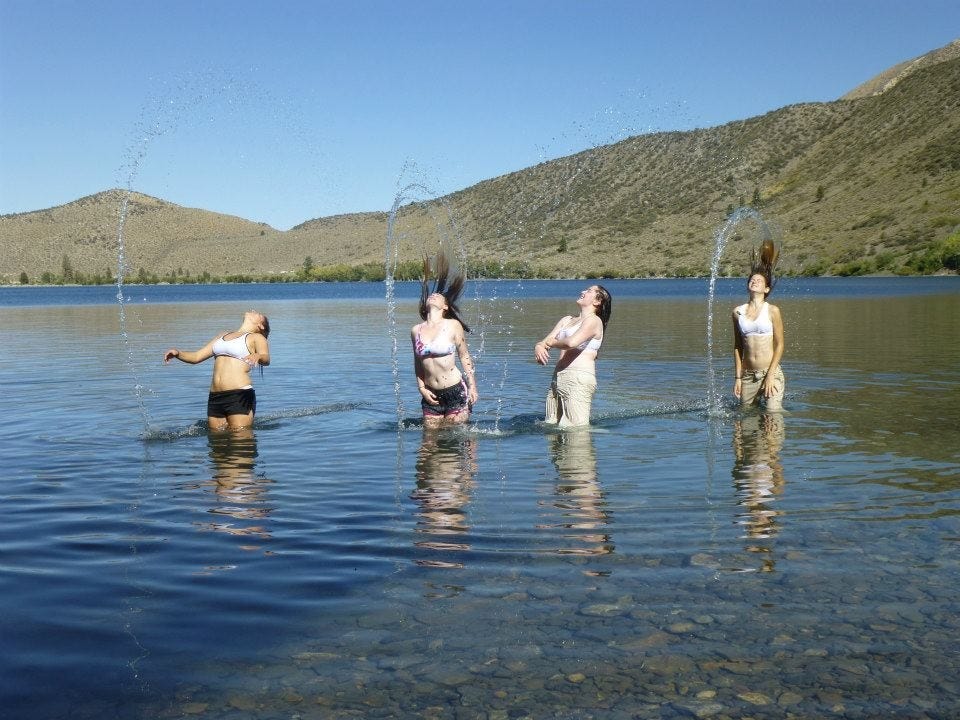
And it wasn’t all work all the time. We did evening yoga, we splashed in alpine lakes, we saw magnificent vistas, we all took part in the tradition of “SPOTlight” — you have an hour to tell whatever life story you like to the group. We stayed up too late most nights telling more stories.
On the final day, we broke camp as a group and set off together back to the vans. With a few miles to go, our group leaders stopped us and had us organize ourselves into a line according to how fast we liked to hike. We would spend the last few miles hiking solo.
Beginning with one of our group leaders and then the faster hikers, we set out one by one, each waiting until the person ahead disappeared from view before starting, and with instructions to slow down until we lost them again if we caught sight of the person ahead.
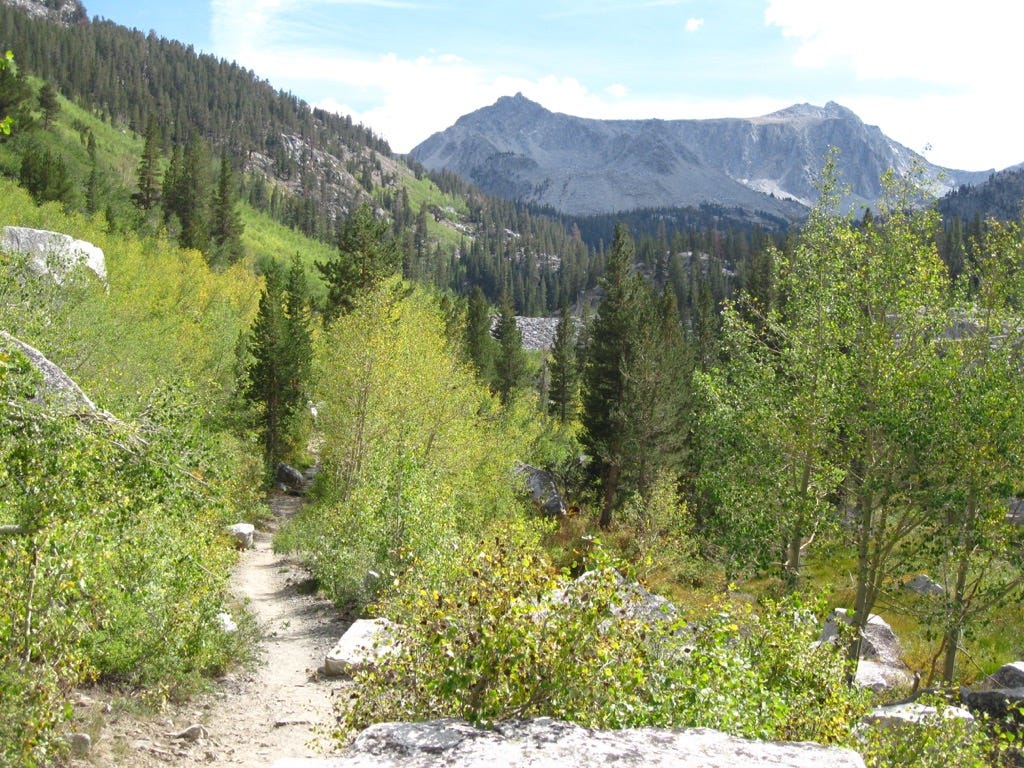
I’ve hiked alone a lot since then, but at the time I wasn’t used to it. I don’t remember exactly what was going through my head, but I remember finding the experience interesting. This sentiment was shared by my groupmates — our general consensus once reunited was that being alone with our thoughts and our magnificent surroundings was an interesting and fulfilling end to an interesting and fulfilling trip.
Then on the way back, the van I was in missed an exit and didn’t realize the mistake until we were almost to San Jose.
To this day, I think of that trip from time to time when I’m on-trail. Contributing even that small bit to the building and maintenance of wilderness trails gave me a whole new level of perspective and appreciation for the trail crews out there clearing the way for us hikers. If you’re a hiker, stop next time you’re out and take a moment to appreciate the trail workers.
And if you’re interested in trying out trail work yourself, the American Hiking Society runs several volunteer vacations in a variety of locations each year, giving participants the chance to spend a week or weekend doing stewardship work in groups of 6-15. I haven’t personally done one yet, but I’d really like to at some point!
So cool! I don't think I ever got to hear about this experience in detail before.
Such an amazing experience! Those natural views don't even seem real with how beautiful they are! Of course looking forward to hearing about the jaunt through Europe one day too!